Armored Mercedes G-Class engineering guide: BR4–BR7 protection levels, 25–43 mm ballistic glass, 420–1,050 kg weight penalties, and the suspension, braking and rollover tradeoffs.

Идеи и Аналитика
Armoring a vehicle starts with a simple question: what threat are you actually protecting against? The answer decides almost everything that follows — the protection level, the materials, the weight you are willing to carry, and the paperwork you will need where you live. This is the main entry point for civilian vehicle armoring. The articles below walk the full path from that first decision to a delivered vehicle: how a car is actually armored and how long it takes, how armor levels are rated and what each one stops, how body panels and glass are specified together, how added weight changes braking and handling, what is legal and what requires special licensing, and how to evaluate an installation partner before you hand over a vehicle. Most readers arrive with one of three questions. Can a normal car be armored at all? How much does it cost, and what drives the price? Is it legal where I drive? Each has a dedicated article in this cluster, and each links back to the others so you can move between the practical, the financial, and the legal view without losing your place. If you are completely new to the topic, start with the pillar guide for the full picture. If you already know your requirement, go straight to the article that matches your situation — level selection, cost, installation logistics, or legality.
Избранная Статья
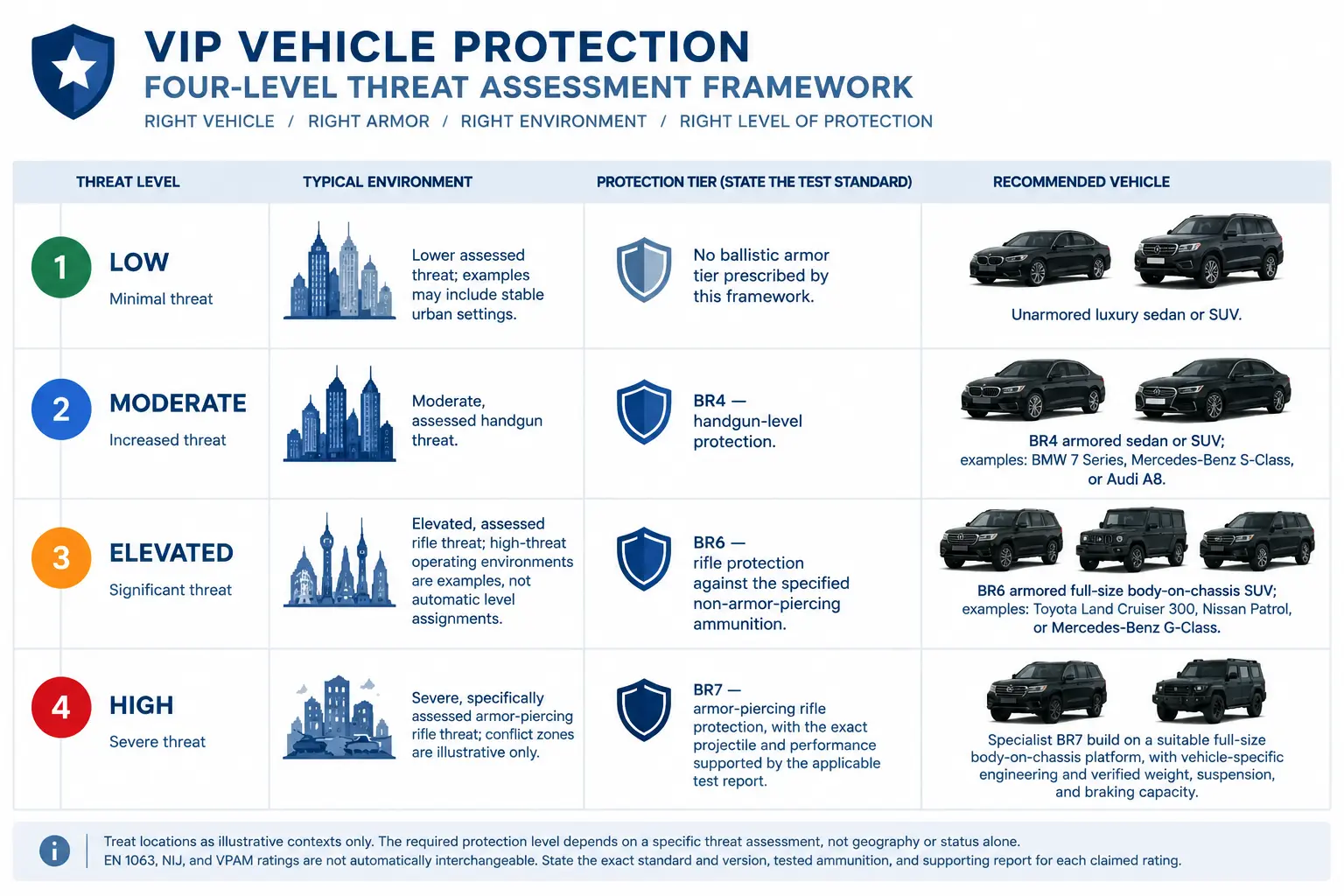
Полное руководство по бронированию гражданских транспортных средств: оценка угроз, уровни защиты BR4/BR6/BR7, платформы транспортных средств, стекло и шины run-flat, стоимость, сроки изготовления и способы проверки поставщика с использованием отчетов о тестировании сторонними лабораториями и платных образцов.